The Fruit of the Spirit Is the Sacrifice of God’s Son
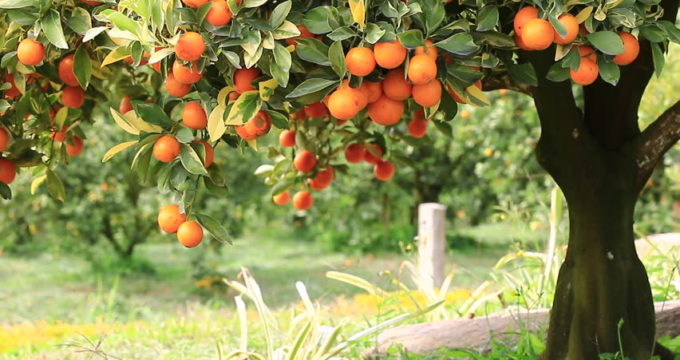
A good tree cannot bear bad fruit, nor can a bad tree bear good fruit.
—Matthew 7:18
I think many Christians have heard the expression “by their fruits you will know them.” If we read the passage of Scripture where Jesus said these words [Mat.7:15-20], we may get the impression that it means this: if a believer does not do “good works”, there is no fruit in his life, and if he sins, he bears “bad fruit”, and unquenchable fire awaits him. Such an interpretation can lead to fear and self-condemnation, because if we look at ourselves, we can usually find plenty of negatives. And the enemy will add to it, using the personal pronoun: “I don’t do enough good works. I often bring God bad fruit.” God gave us His Word not to lead us into self-condemnation, but for our comfort. This means that after reading Scripture our heart should overflow with the love of Christ, not with fear, doubts and self-condemnation. So when a passage causes fear, doubts, self-condemnation or uncertainty about God’s love and goodness, that only shows the passage has been interpreted wrongly.
Jesus said “by their fruits”, not “by their works”. It is important to distinguish between fruits and works, because they are completely different things. For example, a person, even an unbeliever, may give to the poor, and we may say: “What a generous, righteous and noble man.” But who knows the motives of his heart? Perhaps he does this to soothe his conscience, which accuses him of some sins. In that case his deed is not a work of love but a dead work, because the conscience is cleansed not by works but only by the blood of God’s Son [Heb.9:14]. Cain also brought God an offering — or rather, the work of his hands — but the Lord did not accept his offering. He accepted the offering of Abel, which was a type of the Lamb of God. Only one sacrifice satisfies God — the sacrifice of Jesus Christ on the cross [Heb.10:5-6]. No other sacrifices please Him, only those that remind Him of His beloved Son. Only such sacrifices are a sweet-smelling aroma to Him [Eph.5:2].
In the Gospel of Luke Jesus says: “A good man out of the good treasure of his heart brings forth good; and an evil man out of the evil treasure of his heart brings forth evil. For out of the abundance of the heart his mouth speaks. But why do you call Me ‘Lord, Lord,’ and do not do the things which I say?” [Luk.6:45-46] Here we may get the impression that Jesus is talking about believers, because these people call Him “Lord” and yet do not do what He says. But Jesus did not say these words for self-examination, or to spur others on to some works, but so that we could recognise false prophets, who try to catch the unestablished in their cunning nets and lead them off the true path. [Mat.7:15] Why are they called false prophets? Because they pass themselves off as prophets or as believers in God, but they are “false” because they reject the sacrifice of His Son.
The Lord goes on to explain the difference between those who hear and do His words and those who do not: the one who does them, when he builds a house, lays the foundation on the rock, “But he who heard and did nothing is like a man who built a house on the earth without a foundation” [Luk.6:48-49]. What rock was Jesus talking about? Peter writes to the Hebrews: “Coming to Him as to a living stone, rejected indeed by men, but chosen by God and precious” [1 Pet.2:4]. The precious stone which the builders rejected is Christ. That is why Peter goes on: “Therefore, to you who believe, He is precious; but to those who are disobedient, ‘The stone which the builders rejected Has become the chief cornerstone’” [1 Pet.2:7]. To us who believe, Christ is precious, so the foundation of our house, the foundation of our faith, is Christ. Unbelievers reject Him, and the foundation of their faith is the works of the law, by which they try to please God.
The Sacrifice That Pleases God
Let’s go back to the story of Cain and Abel. It is, by the way, my favourite story in the Old Testament. My favourite because it is very short, yet so many precious truths revealing our Lord’s sacrifice are hidden in it. All the more so because it is the first time in Scripture that a man brought God an offering and obtained witness that he was righteous [Heb.11:4]. This is a story about righteousness through faith. And when a theme appears in the Bible for the first time, weighty truths that reveal the essence of that theme are hidden there.
And in the process of time it came to pass that Cain brought an offering of the fruit of the ground to the LORD. Abel also brought of the firstborn of his flock and of their fat. And the LORD respected Abel and his offering, but He did not respect Cain and his offering.
—Genesis 4:3-5
You see, both brothers brought God fruit as an offering to the Lord, but God accepted Abel’s offering and not Cain’s. Why? Because Cain brought an offering from the ground, the work of his hands, which is bad fruit. That is why Jesus spoke of builders: “who built a house on the earth without a foundation”. Abel brought a heavenly offering, good fruit, because the slain lamb, and especially its fat, reminded God of the sacrifice of His Son. The fat speaks of the best part of the animal offered in sacrifice.
In the Old Testament, when someone brought a peace offering to the Lord, he brought “The fat that covers the entrails and all the fat that is on the entrails, the two kidneys and the fat that is on them by the flanks, and the fatty lobe attached to the liver above the kidneys, he shall remove; and Aaron’s sons shall burn it on the altar upon the burnt sacrifice, which is on the wood that is on the fire, as an offering made by fire, a sweet aroma to the LORD.” [Lev.3:3-5]. Notice that this is a peace offering, that is, the offering after which a man had peace with God. What is the best in Jesus, and what brings us peace and rest? “Jesus came and stood in the midst, and said to them, ‘Peace be with you.’ When He had said this, He showed them His hands and His side. Then the disciples were glad when they saw the Lord.” [Jhn.20:19-20]. Even now, as Jesus sits at the right hand of the Father and the Father looks at Him, the pierced hands, feet and side of Jesus are a sweet aroma to the Father. They remind Him of the perfect sacrifice His Son offered on the cross. These places on Jesus’ body are a symbol of God’s eternal love for us. The fat symbolises the love of Christ!
The Lord’s Discipline
The story of Cain and Abel can also be seen in the parable of the prodigal son. The elder son worked in the field and, like Cain, brought his father an offering of the fruit of the ground. And what did the younger son do? Did he bring God a lamb and its fat? That is the beauty of God’s grace. The Father offered up the fatted calf for all of us. God so loved the world that He offered up His beloved [fatted] Son. He Himself did for His sons what they were powerless to do. The Father invites and receives every son into His house, not to work in the field, but to eat the fatted calf and make merry with Him. To enjoy the love of Christ and rejoice in God’s presence, which has been given to us through Christ’s sacrifice.
Sometimes we are frightened by the verse: “For whom the LORD loves He chastens, And scourges every son whom He receives” [Heb.12:6]. It seems to us that God longs to punish us for some wrongdoing. Both in the story of Cain and Abel and in the story of the prodigal son, the Lord God and Father received His sons, because the key word here is precisely receives. The father had already received Abel and the younger son, while Cain and the elder son he chastened — or, closer to the original, trained. “So the LORD said to Cain, ‘Why are you angry? And why has your countenance fallen? If you do well, will you not be accepted? And if you do not do well, sin lies at the door. And its desire is for you, but you should rule over it.’” [Gen.4:6-7]. In Hebrew, sin and sin offering are the same word. The Lord was telling Cain: “At the door — at the cross — a sin offering already lies. I have already prepared it for you. Accept it: that will be your good deed, and you will be accepted, you will be righteous.”
The father also called the elder son and invited him, when he refused, into the house where the sacrifice had already been prepared, and so everyone rejoiced and made merry. “And he said to him, ‘Son, you are always with me, and all that I have is yours. It was right that we should make merry and be glad, for your brother was dead and is alive again, and was lost and is found.’” [Luk.15:31-32]. The father was telling the elder son: “Why are you trying to earn your blessings when they already belong to you? Better come into the house and rejoice and make merry, because your brother, Jesus Christ, was dead and is alive again: He was sacrificed on the cross but rose on the third day!”
The Fruit of the Spirit
But the fruit of the Spirit is love, joy, peace, longsuffering, kindness, goodness, faithfulness, gentleness, self-control. Against such there is no law. And those who are Christ’s have crucified the flesh with its passions and desires.
—Galatians 5:22-24
Notice that the Spirit has only one fruit, but it has many sides. As we have already seen, only one fruit satisfies God — the sacrifice of His beloved Son, the Lamb of God. So love here is the love of Christ, which was revealed to us on the cross. Joy is the joy of the Lord, which we find when we learn that He is risen. Peace is His peace, which surpasses all understanding. His longsuffering, which is our salvation. His kindness, which leads us to repentance. His goodness, which sends rain from heaven and fruitful seasons on the righteous and the unrighteous alike, filling our hearts with food and gladness. His faithfulness — His faith, which justifies us. His gentleness, which gives us rest, our inheritance, for the meek will inherit the kingdom of God, which is righteousness and peace and joy in the Holy Spirit. And His self-control, for He did not fall into works when the evil one tried to tempt Him.
Why keep fighting your flesh, or trying with this flesh to earn God’s favour and His blessings? We who are Christ’s have crucified the flesh with its passions. For those who have accepted Christ’s sacrifice there is no longer any law. Those who have accepted this sacrifice and believed in His name are already accepted in the Beloved. Jesus bore the discipline and the punishment for every son. All that is left for us is to enjoy His love, rejoice with His joy, abide in His peace, experience His longsuffering, kindness and goodness, live by His faith, rest thanks to His gentleness — and then no weapon or temptation formed against us shall prosper.
Christ, discipline, fruit, love, righteousness, sacrifice, worksLeave a Comment
Comments
| 🙂 | 🙁 | 😄 | 😎 | 😉 | 😮 | 😢 |
| 😰 | 😐 | 😘 | 🤭 | 😛 | 😝 | 😳 |
| 🥴 | 😴 | 😲 | 🥱 | 😍 | 🥰 | 💗 |
| 😟 | 😠 | 🤓 | 🤐 | 😷 | 🤔 | 😇 |
| 👍 | 👎 | 💪 | 👏 | 🌞 | ⛪ | 🙏 |
| ⏱ | 🎵 | 🎧 | 🌻 | ⭐ | 🍰 | 🥳 |
Аминь! Спасибо Господь за утешение. 🙂